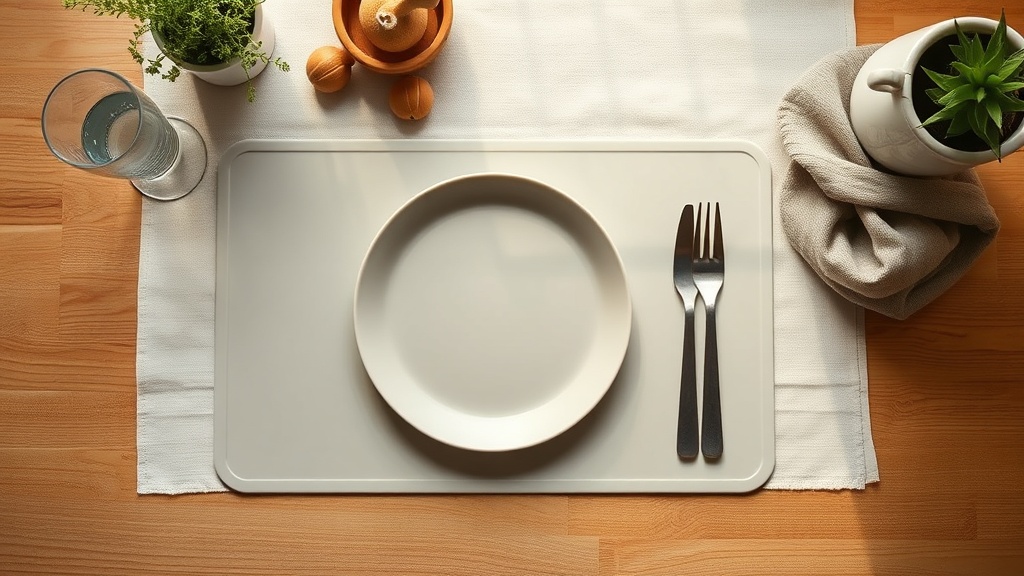
Is it safe to use a silicone mat under a baby's plate?
Low concern at room temperature. Do not use silicone mats for hot, oily food or baking unless the product is made for it.
What is in it
Silicone mats are flexible polymers made with siloxane chemistry. A mat under a baby plate usually has less food contact than a silicone bowl or bakeware, especially if the food stays on the plate.
The bigger concern is heat. Silicone used for baking or hot fatty foods has a different exposure profile than a room-temperature placemat.
What the science says
A 2025 Journal of Hazardous Materials study measured cyclic siloxanes from silicone bakeware during 60-minute baking at 177 C. The study found migration into a fatty food simulant and emissions into indoor air during baking.
That study does not test baby placemats at room temperature. It supports a narrower rule: avoid heating silicone with fatty foods, and do not use damaged or strongly scented silicone with baby food.
What to do
For a mat under a plate at room temperature, risk looks lower. Keep food on the plate, wash the mat with mild soap, and replace it if it gets sticky, oily, cracked, or strongly scented. For serving warm food, use a separate plate or bowl made from glass, porcelain, stainless steel, or bamboo when age-appropriate and supervised.
The research at a glance
| Study | Journal | Year |
|---|---|---|
| Silicone bakeware as a source of human exposure to cyclic siloxanes via inhalation and baked food consumption. | J Hazard Mater | 2025 |