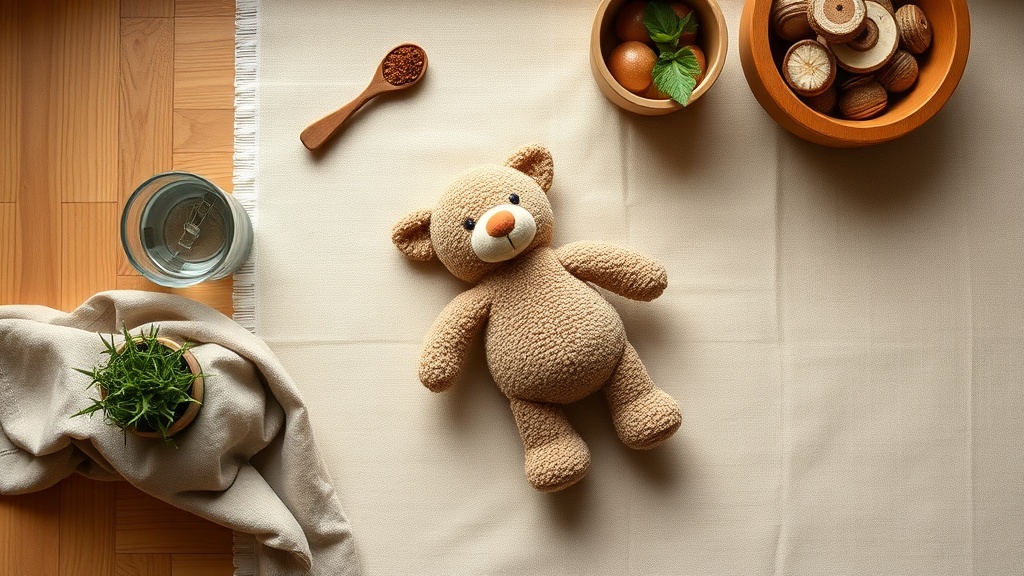
Is it safe to let a baby chew on a hand-me-down stuffed animal?
Use caution. Hand-me-down stuffed animals are better as shelf toys than chew toys for babies.
What is in it
A stuffed animal is fabric, stuffing, thread, dye, and sometimes surface treatments. A hand-me-down toy can also hold house dust, fragrance, pet dander, mold from storage, or loose plastic eyes.
Chewing changes the risk. Saliva, pulling, and biting create closer contact than holding the toy across the room.
What the science says
A 2025 Environmental Science & Technology study used suspect screening on 92 consumer products and found different chemical signatures across product types. It did not test hand-me-down stuffed animals, so it supports caution about unknown older consumer products rather than proving a specific stuffed-toy hazard.
A 2025 Science of the Total Environment study found PFAS and organophosphate esters in sampled household textiles and children's garments. Sweat increased modeled dermal absorption. That is textile-transfer context, not a saliva test.
What to do
Do not use an old stuffed animal as a baby chew toy. Wash washable toys, dry them fully, and check seams, eyes, stuffing, batteries, and peeling fabric. If a toy smells perfumed, sheds, leaks stuffing, or cannot be washed, keep it decorative.
For mouthing, use an age-appropriate teether or pacifier blanket made for babies. For play, choose washable baby toys with no loose parts.