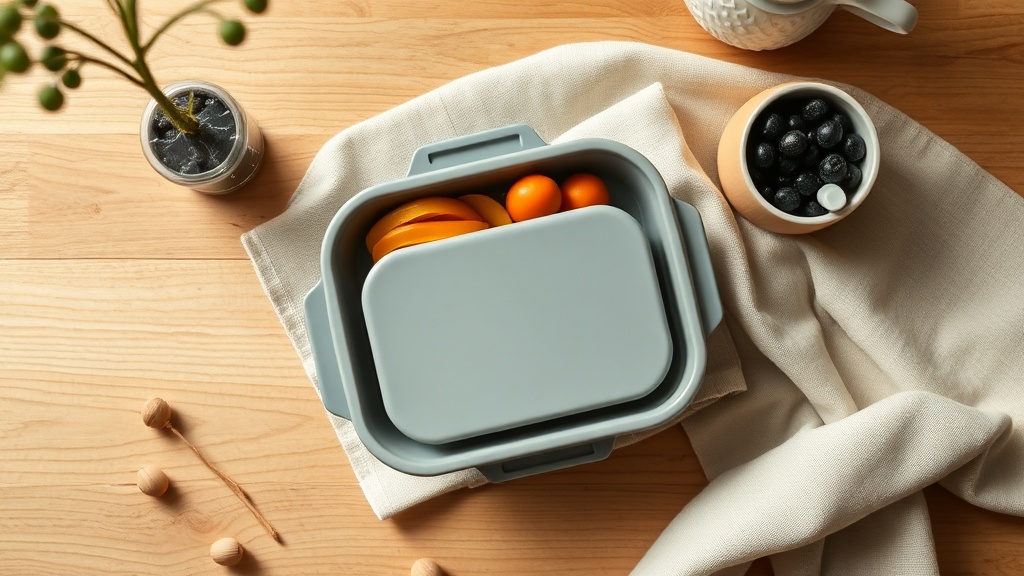
Is it safe to buy kids' lunchboxes made from plastic with silicone lids?
Use caution. The silicone lid is not the issue. The plastic food tray is.
What's actually in it
Many kids lunchboxes advertise a silicone lid, but the food still sits in a polypropylene or Tritan plastic base. Silicone seals can be useful. The bigger concern is warm, acidic, oily, or long-contact food sitting against plastic for hours.
Do not microwave plastic lunchboxes. Heat is the fastest way to raise plastic particle release.
What the research says
A 2025 study in Journal of Agricultural and Food Chemistry tested Australian polypropylene food storage containers. Researchers found both microplastics and nanoplastics released into water. Higher levels were seen after rinsing with 90 C water compared with room-temperature water.
For kids lunches, the best swap is a stainless steel lunchbox. If that is not available, pack wet or acidic foods in small glass containers and use the plastic shell only as the outer carrier. Keep food cold. Reheat on a ceramic plate or in glass, not in the lunchbox.
The research at a glance
| Study | Journal | Year |
|---|---|---|
| Release of Nanoplastics from Polypropylene Food Containers into Hot and Cold Water. | J Agric Food Chem | 2025 |
What to use instead
For foods that sit wet or get reheated, use glass containers instead of plastic lunchbox compartments.
Shop Non-Toxic Kitchen