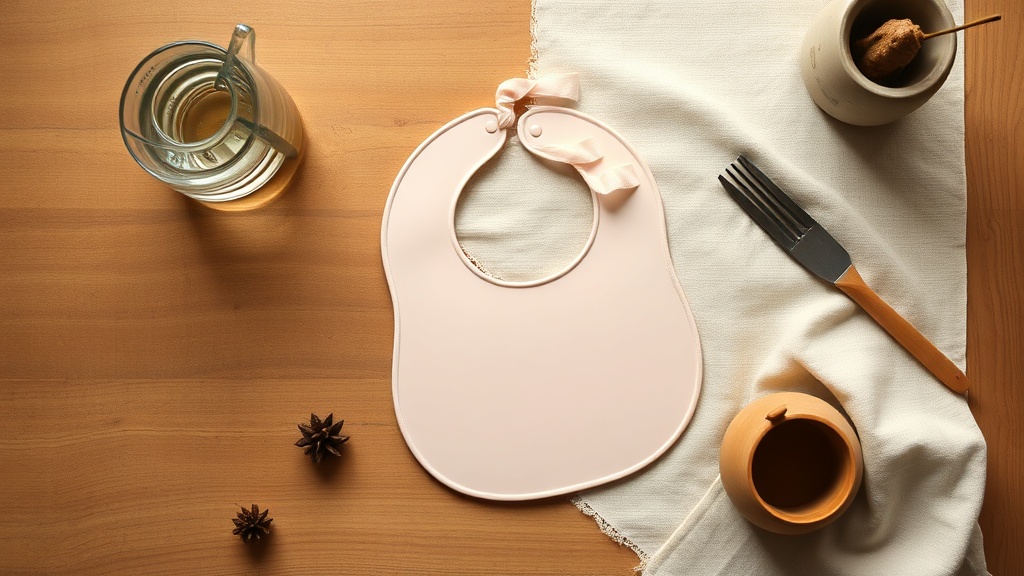
Are plastic baby bibs safe if they use phthalate or replacement plasticizers?
Avoid unknown soft plastic baby bibs, especially older vinyl-like bibs with odor or sticky surfaces. The checked sources support caution about phthalates and replacement plasticizers, not a claim that every plastic bib contains the same additive.
Plastic baby bibs are feeding gear, not just clothing. They sit against the neck, catch food, get wiped, and often end up near a baby’s mouth. If the bib is soft plastic or plastic-coated fabric, plasticizers are the chemistry to question.
The checked sources do not prove that every plastic bib contains phthalates. They do support a cautious rule for unknown soft plastic used around food and babies.
What the evidence says
A 2026 Environment International study evaluated DEHP and replacement plasticizers in human neurospheres and found DEHP and TOTM had the highest developmental neurotoxicity potential among the tested plasticizers. Another 2026 Environment International study found early-life phthalate and replacement plasticizer exposures were associated with changes in brain connectivity and structure measures in early childhood. That evidence supports avoiding unnecessary flexible plastic contact where simpler bib materials work.
Better bib choices
- Use organic cotton or bamboo bibs for low-mess meals.
- Use clearly labeled food-grade silicone only when a wipe-clean bib is truly needed.
- Avoid older soft plastic bibs with strong odor, stickiness, or unknown material.
- Do not heat or sanitize soft plastic bibs in ways the label does not support.
This is a practical baby-category swap because bibs touch food, skin, and mouths every day.
The research at a glance
What to use instead
Use organic cotton or bamboo bibs for everyday feeding when a wipe-clean plastic bib is not needed.
Shop Non-Toxic Baby