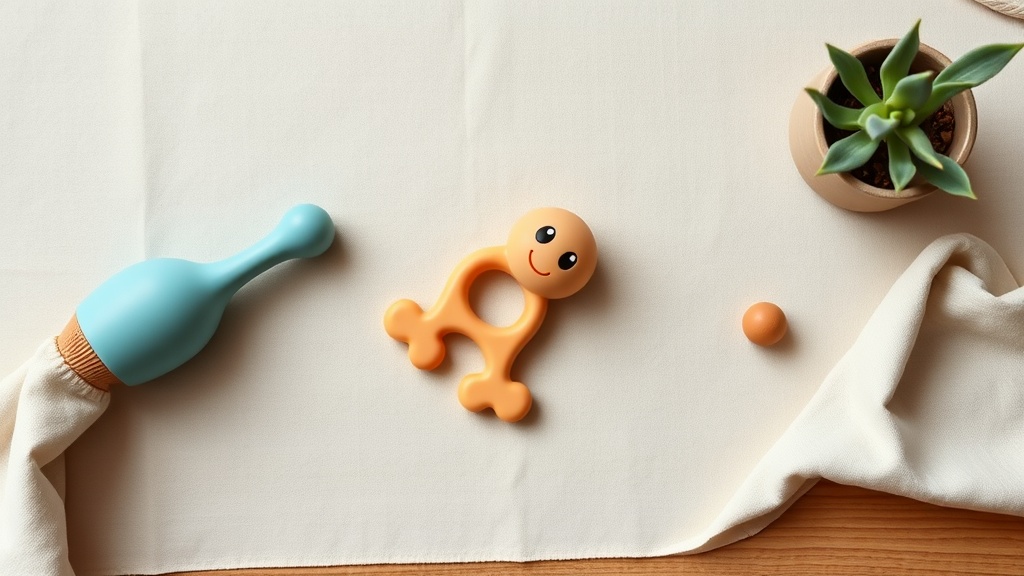
Are soft PVC plastic toys safe for toddlers who put them in their mouths?
Avoid soft PVC toys for toddlers who mouth toys. Soft PVC can use phthalate plasticizers, and saliva-simulant studies show migration from some PVC toys.
Short answer
Avoid soft PVC and vinyl-like toys for toddlers who still mouth toys.
The concern is repeated contact with flexible plastic in the mouth, not one brief touch.
What the concern is
Soft PVC can rely on phthalate plasticizers for flexibility. Toys can also contain volatile substances, pigments, and recycled-material residues that are not obvious from the label.
What the research says
A 2002 Food Additives and Contaminants study found that 47 of 62 sampled soft toys contained plasticized PVC. DINP and DEHP were common plasticizers, and some DEHP migration exceeded the study guidance value.
A 2015 Journal of Chromatography B study measured total and migrated phthalates from plasticized polymeric toys and childcare articles into artificial saliva.
A 2026 Talanta study tested 56 plastic toys and identified 216 volatile substances. It found diisobutyl phthalate above the 0.1 percent threshold in 6 PVC or TPR toys.
What to do instead
Choose solid wood, cotton fabric toys, stainless steel, or clearly tested materials. Remove sticky, strongly scented, cracked, or old soft plastic toys from mouth-play rotation.
The research at a glance
| Study | Journal | Year |
|---|---|---|
| Migration of phthalates from PVC toys into saliva simulant by dynamic extraction. | Food Addit Contam | 2002 |
| Simultaneous GC-MS determination of eight phthalates in total and migrated portions of plasticized polymeric toys and childcare articles. | J Chromatogr B Analyt Technol Biomed Life Sci | 2015 |
| Non-targeted analysis of unknown volatile substances in plastic toys using GC-Orbitrap high-resolution mass spectrometry. | Talanta | 2026 |
What to use instead
For toddlers, choose solid wood toys and clearly tested materials instead of soft PVC or vinyl-like plastic toys.
Shop Non-Toxic Baby