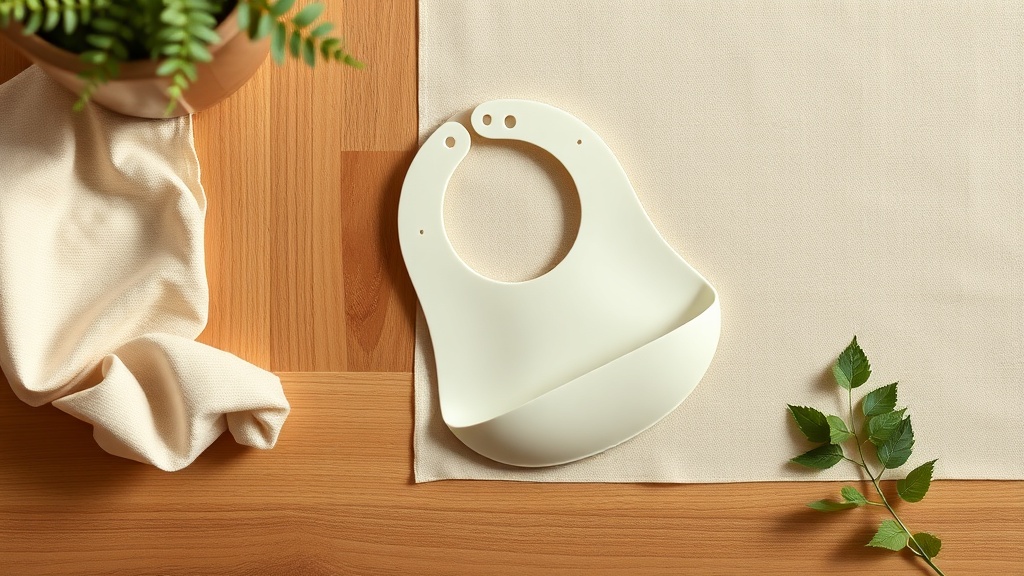
Are plastic baby bibs safe for infants?
caution
Short answer
Choose washable cotton bibs for daily feeding when you can.
We did not find a direct PubMed study that tests plastic baby bibs. So this page should not be read as proof that every plastic bib is a problem.
Why this matters
A bib sits near food, saliva, skin, and a baby's mouth. Babies also chew bib edges and rub food into the fabric.
For that kind of contact, a simple washable fabric bib is easier to trust than soft plastic, vinyl-like coatings, or peeling waterproof layers.
What the research says
A 2026 Environmental Research birth cohort study measured widespread childhood exposure to legacy and alternative plasticizers.
A 2026 Journal of Environmental Science and Health, Part B study found phthalates and bisphenols could migrate from polyethylene and polystyrene beverage cups.
These are not bib studies. They support a cautious daily default around plasticized food-contact and child-contact items.
What to do instead
Use washable cotton bibs for meals. Replace any bib that cracks, peels, smells strong, turns sticky, or sheds coating.
For feeding swaps, browse organic cotton bibs.
The research at a glance
What to use instead
For feeding, choose washable organic cotton bibs instead of soft plastic, vinyl-like coatings, or peeling waterproof layers.
Shop Non-Toxic Baby