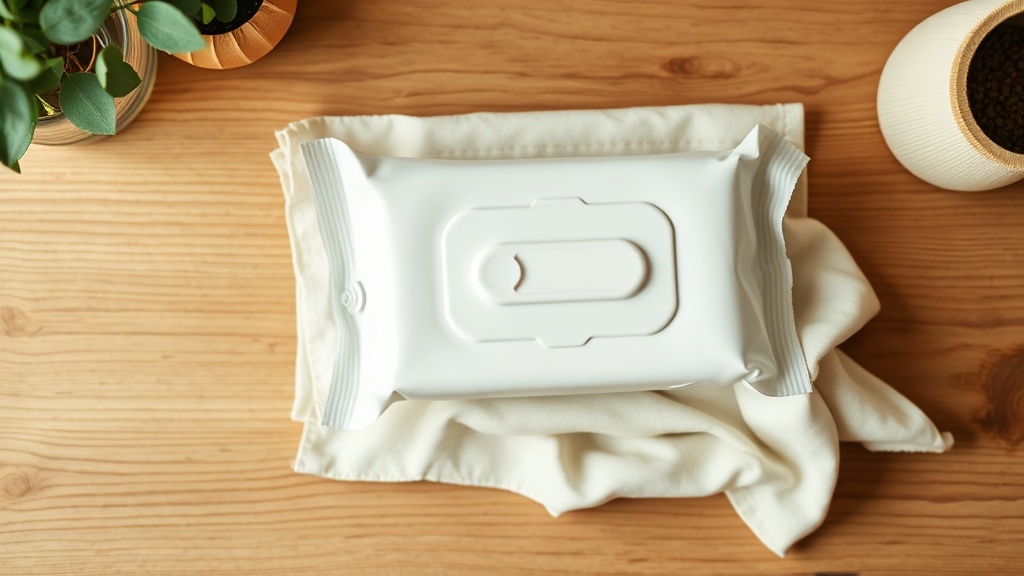
Can baby wipes expose newborn skin to phthalates, preservatives, or personal-care chemicals?
caution
Short answer
Use baby wipes when you need them. For newborns, keep the routine simple: no fragrance, short ingredient lists, and fewer leave-on products when water will do.
The concern is repeated contact on delicate skin, not one wipe during a hard day.
Why this matters
Newborn skin is thin and diaper areas can already be irritated. A wipe that feels mild to an adult can still be too much when used many times each day.
Labels matter because wipes are not just water. They can include preservatives, fragrance ingredients, fabric blends, and plasticizers from materials or packaging.
What the research says
A 2026 Journal of Environmental Science and Health A study tested 15 wet-wipe samples. Diethyl phthalate was found in all samples, and 5 samples contained additional phthalate compounds.
The same study reported that non-cancer risk values were within accepted limits, but DEHP and DBP detection raised regulatory concerns in that study setting. The honest takeaway is label scrutiny, not panic.
What to do instead
Choose fragrance-free wipes with short ingredient lists. For routine diaper changes at home, use a soft baby washcloth with water when practical.
Stop using any wipe that causes redness, stinging, or a rash. Ask your pediatrician if irritation does not improve.
The research at a glance
| Study | Journal | Year |
|---|---|---|
| Detection of phthalate compounds in wet wipes using LC-MS/MS: risk assessment and LC-QTOF/MS findings. | J Environ Sci Health A Tox Hazard Subst Environ Eng | 2026 |
What to use instead
For routine cleanups at home, a soft baby washcloth with water can reduce repeated leave-on wipe ingredients.
Shop Non-Toxic Baby