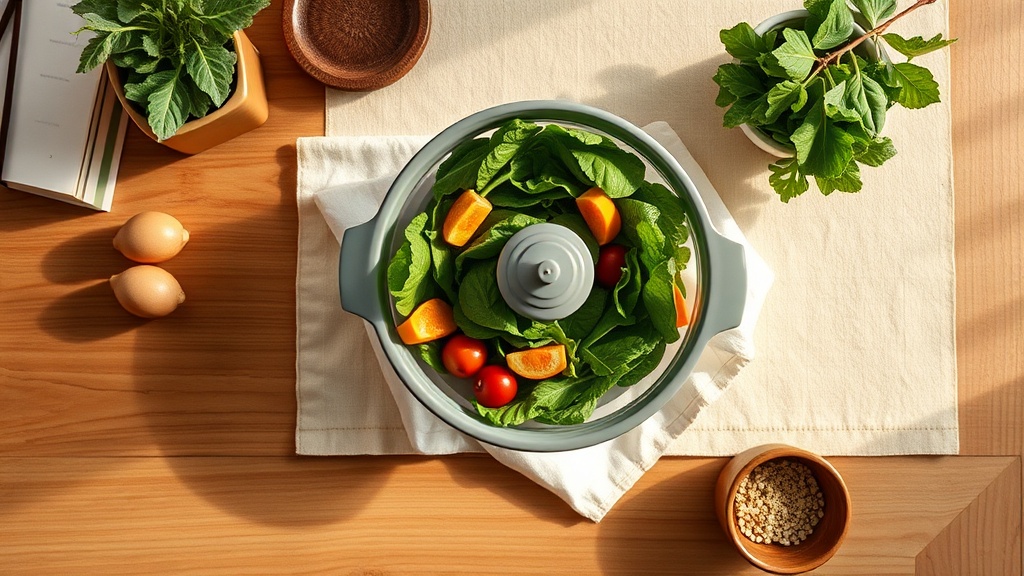
Is it safe to wash fresh produce in a plastic salad spinner?
Use caution, but do not panic. Cold-water salad spinning is lower concern than hot plastic food contact.
What's actually in it
Most salad spinners use a polypropylene bowl and basket. Lettuce touches the plastic during cold rinsing and spinning. That is less harsh than microwaving, boiling water, or hot oil.
The bigger issue is wear. Scratched, cloudy, or cracked plastic has more damaged surface area touching food and water.
What the research says
A 2025 Journal of Agricultural and Food Chemistry study found polypropylene food containers released nanoplastics and microplastics into water. Hot water at 90 C released more particles than room-temperature water.
Practical takeaway: a plastic salad spinner used with cold water is not your highest-priority kitchen swap. Replace it when it is scratched or cracked. If you are buying new, choose stainless steel, glass, or a simple cotton towel method.
Do not store wet greens in a scratched plastic spinner bowl.
The research at a glance
| Study | Journal | Year |
|---|---|---|
| Release of Nanoplastics from Polypropylene Food Containers into Hot and Cold Water. | J Agric Food Chem | 2025 |
What to use instead
When your spinner wears out, shop stainless steel kitchen swaps and move washed greens into glass, steel, or a clean towel.
Shop Non-Toxic Kitchen