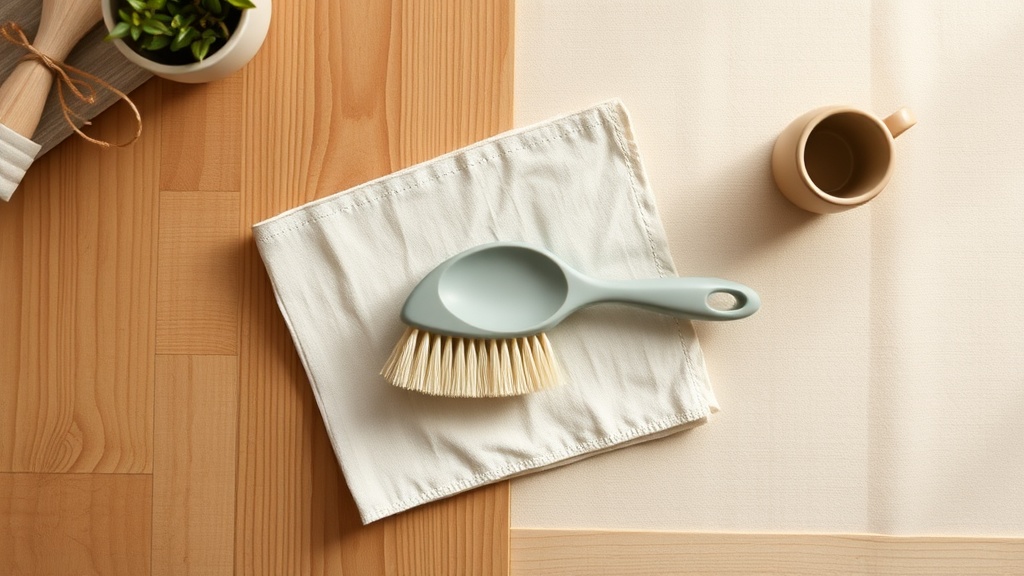
Is it safe to use a plastic dish brush with hot water?
Use it if you have it, but hot water and scrubbing make plastic bristles a weak daily choice.
What to know
A plastic dish brush is not an emergency. But it is also not the best daily tool for hot, soapy scrubbing.
Plastic bristles can bend, flatten, snap, and roughen with heat and friction. If bristles are frayed, missing, sticky, or bent out of shape, replace the brush.
For a better swap, choose a brush with plant-fiber bristles and a wood or stainless steel handle. Let it dry fully between uses.
What the research says
A 2025 J Agric Food Chem study found that polypropylene food containers released microplastics and nanoplastics into water, with higher release after 90 C rinsing than room-temperature rinsing.
A 2023 Environ Sci Pollut Res Int study found that household dishwashing released microplastics and that hotter, longer washing released more.
These are not dish brush brand tests. They support the rule that heat, time, and plastic food-contact tools deserve caution.
The research at a glance
| Study | Journal | Year |
|---|---|---|
| Release of Nanoplastics from Polypropylene Food Containers into Hot and Cold Water. | J Agric Food Chem | 2025 |
| Contribution of household dishwashing to microplastic pollution. | Environ Sci Pollut Res Int | 2023 |