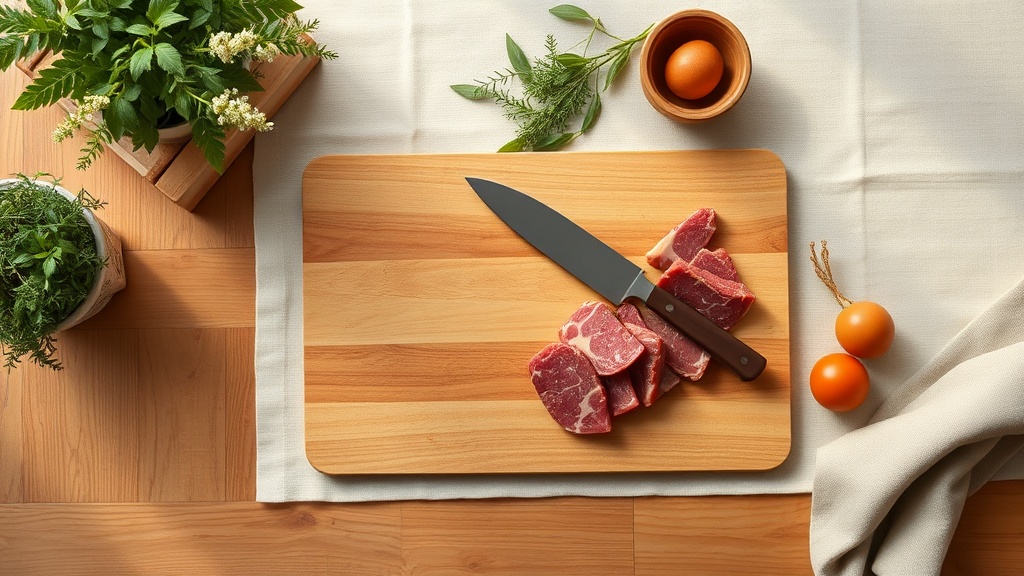
Is it safe to use a plastic cutting board with wet meat?
Use caution. Plastic boards can add polyethylene microplastics to meat, and deep grooves make any board harder to clean.
Short answer
Do not use a deeply scarred plastic board for wet meat. A clean plastic board can be washed, but knife marks can shed polyethylene pieces into food. If you want less plastic contact, use a smooth wood board and clean it right away.
What the research says
A 2022 International Journal of Environmental Research and Public Health study found microplastic contamination in chicken and fish cut on polyethylene cutting boards. The study traced the source to the plastic cutting boards. FDA guidance says cutting boards should be washed with hot, soapy water after each food and replaced when grooves and cracks are hard to clean. A 2025 Journal of Food Protection study found lower E. coli detection on sugar maple boards than on HDPE boards under its test conditions.
What to do at home
Use one board for raw meat, poultry, seafood, and eggs. Use another board or plate for ready-to-eat foods. Wash after each use, dry fully, and replace any board with deep grooves.
The research at a glance
| Study | Journal | Year |
|---|---|---|
| Microplastic Contamination of Chicken Meat and Fish through Plastic Cutting Boards. | Int J Environ Res Public Health | 2022 |
| Cleaning (Food Safety for Moms-to-Be) | 2018 | |
| Hygienic Evaluation of Wooden Cutting Boards: Microbiological Parameters. | J Food Prot | 2025 |
What to use instead
Shop smooth wood cutting boards for prep work you can wash and dry right away.
Shop Non-Toxic Kitchen