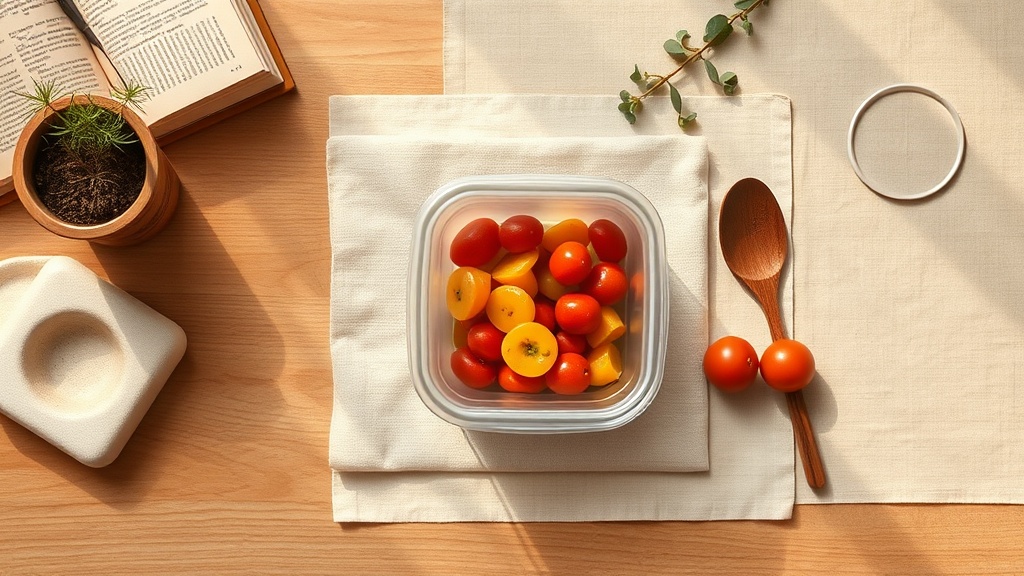
Is it safe to store leftovers in reused plastic containers?
Avoid reused plastic containers for hot, oily, acidic, or long-term food storage. Direct container studies show that heat, fat, time, and repeated use can increase migration or particle release. Glass storage is the better default.
Short answer
Avoid reused plastic containers for hot, oily, acidic, or long-term leftovers.
Glass storage does the same job without repeated food contact against aging plastic.
Why this matters
Reuse sounds responsible, but old plastic can be scratched, stained, cloudy, or warped. Those are signs the material is wearing down.
Leftovers often involve heat, oil, tomato sauce, soup, or several days of storage. That is not the best job for old plastic tubs.
What the research says
A 2025 Food Chemistry study measured microplastics released from plastic food containers during rinsing and migration tests. The study found that high-fat foods, temperature changes, and long exposure periods promoted microplastic release.
A 2024 Journal of Hazardous Materials study tested microplastic migration from PP, PET, and PS water and food containers. It found that temperature and food type were key factors, and direct microwave heating released more particles than the FDA-guidance test condition.
A 2023 Food Chemistry study on reusable polypropylene food containers found higher silver migration with temperature, contact time, acidity, and repeated use. It also detected silver-containing microplastics in food simulants.
What to do instead
Move leftovers into glass storage. Do not microwave old plastic. Retire containers that are scratched, cloudy, stained, warped, or smelly.
For storage swaps, browse glass food storage.
The research at a glance
What to use instead
Use glass storage for leftovers, especially hot, oily, or acidic foods. Retire plastic tubs that are scratched, cloudy, warped, or stained.
Shop Non-Toxic Kitchen