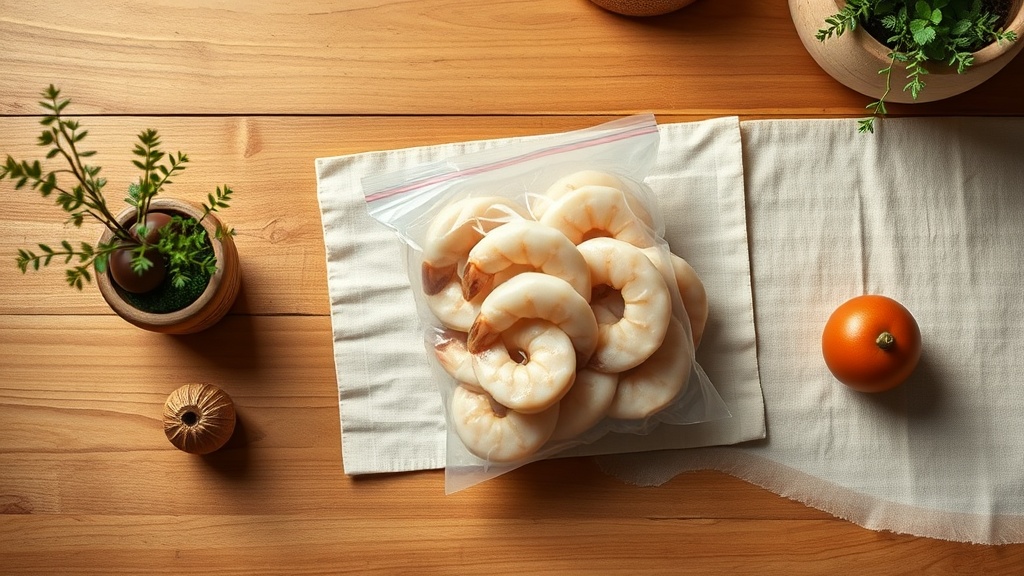
Is it safe to eat frozen shrimp or fish fillets from plastic bags?
Use caution. Packaged frozen seafood can contain microplastics, but the study does not prove every particle came from the bag.
Short answer
Frozen seafood is not an automatic no. The smarter move is to lower extra plastic contact around it.
What can add exposure
Frozen shrimp and fish can pick up microplastics from the ocean, processing water, air, handling, and packaging. The plastic bag is one possible source, but it is not the only source. The honest answer is not to panic about one bag. It is to stop adding more plastic contact at home.
What the research says
A 2026 Food Chemistry study tested six packaged frozen seafood products. Microplastics were found in every sample, with 421 particles total. Common polymers included PTFE, PVC, and PVA. The authors called for continuous monitoring and safer packaging across the seafood supply chain.
The study supports caution with packaged frozen seafood. It does not prove the retail bag was the only source of the particles.
What to do
If you buy bagged frozen seafood, rinse the ice glaze under cold running water before cooking. Thaw seafood in a covered glass dish in the fridge, not in the bag. Do not microwave seafood in plastic packaging. If you buy seafood at the counter, ask for paper wrap when the store allows it.
The research at a glance
| Study | Journal | Year |
|---|---|---|
| Assessment of potential health risk from microplastic contamination in packaged frozen seafood. | Food Chem | 2026 |
What to use instead
Shop glass food storage for thawing and storing seafood without extra plastic contact.
Shop Non-Toxic Kitchen