Does store-bought rotisserie chicken sit in a plastic container that leaches chemicals?
Use caution. Hot, fatty chicken in a plastic clamshell is a good reason to transfer the food when you get home.
What's actually in it
Store-bought rotisserie chicken is often packed hot in a plastic clamshell. The exact plastic can vary by store and supplier.
The concern is the setup: heat, fat, and food-packaging plastic. You do not need to panic over one chicken. But it is smart to reduce how long hot, fatty food sits in plastic.
What the research says
A 2025 Journal of Agricultural and Food Chemistry study found polypropylene food storage containers released nanoplastics and microplastics into water. Release was higher after 90 C water contact than room-temperature water contact.
A 2025 Journal of Hazardous Materials total diet study found plasticizers in 85% of analyzed food samples. It also found DEHA was mainly related to fresh food wrapped in plastic materials, with meat among the food groups where some non-phthalate plasticizers were detected.
These studies do not test rotisserie chicken clamshells directly. They support a practical rule: do not leave hot, fatty food in plastic when you can move it.
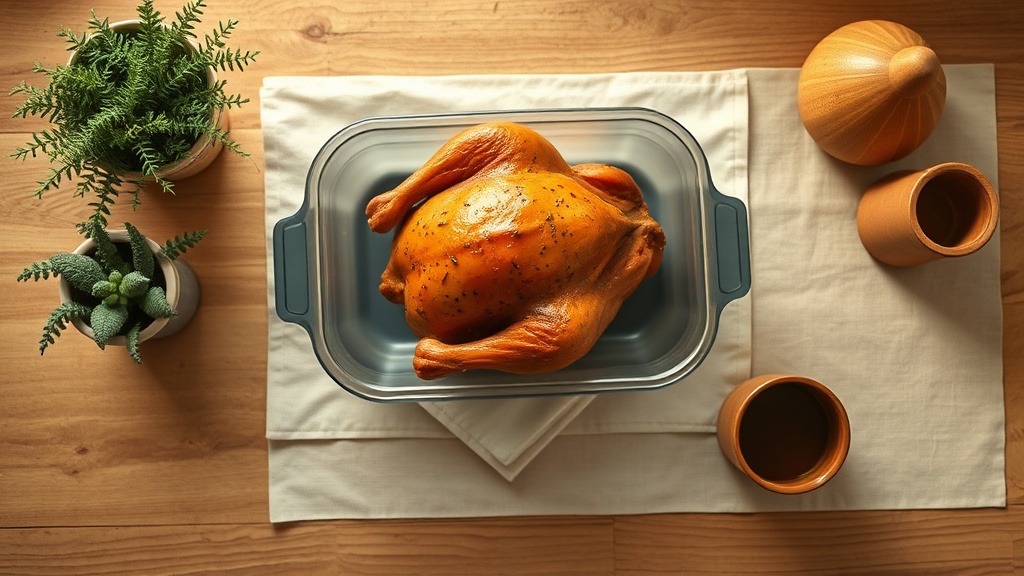
Transfer the chicken to a glass, ceramic, or porcelain platter when you get home. Store leftovers in glass. If your store offers a foil-lined paper bag, choose that over the plastic dome.
The research at a glance
| Study | Journal | Year |
|---|---|---|
| Release of Nanoplastics from Polypropylene Food Containers into Hot and Cold Water. | J Agric Food Chem | 2025 |
| Plastic additives in the diet: Occurrence and dietary exposure in different population groups. | J Hazard Mater | 2025 |
What to use instead
For hot chicken at home, transfer it to a porcelain or glass serving platter instead of leaving it in the plastic clamshell.
Shop Non-Toxic Kitchen