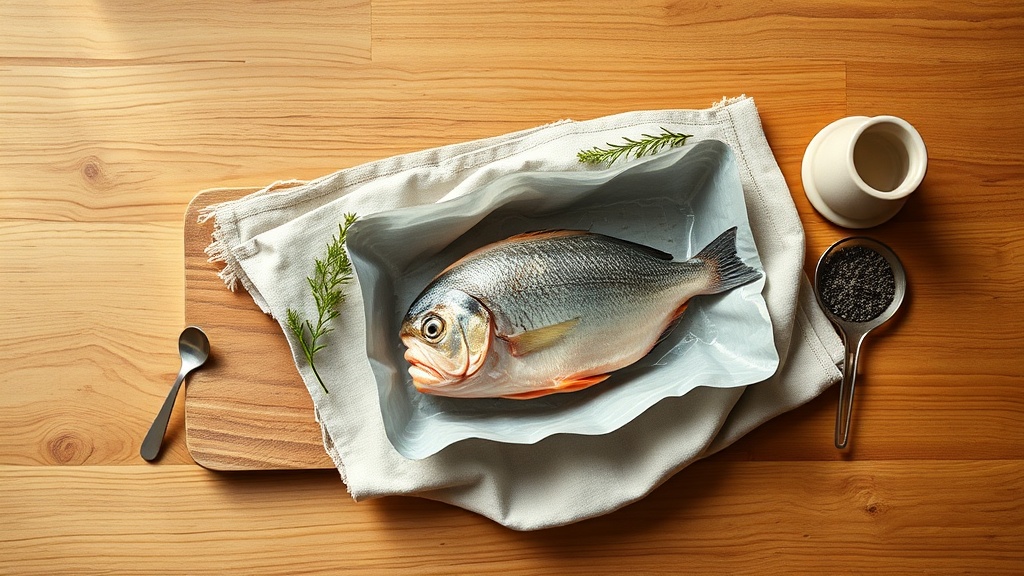
Can packaged frozen seafood carry microplastic concerns?
Use caution, but do not avoid seafood only because of packaging. A 2026 Food Chemistry study found microplastics in all 6 packaged frozen seafood products tested, with species-dependent risk estimates and safer packaging recommended across the supply chain.
What is actually in it
Frozen seafood can pick up microplastics from the ocean, processing, handling, and packaging. Plastic bags, trays, films, and vacuum packs add more contact points.
Seafood also provides protein and nutrients. The goal is not to make seafood scary. The goal is to handle it in ways that reduce extra plastic contact.
What the research says
A 2026 Food Chemistry study tested 6 packaged frozen seafood products: Manila clam, Chilean mussel, deep-water rose shrimp, European anchovy, European pilchard, and saithe. Microplastics were found in all samples, with 421 particles total. Most were black and blue fibers between 1 and 5 mm.
The study identified PTFE, PVC, and PVA as dominant polymers, and risk estimates varied by seafood species and eating patterns. The authors called for ongoing monitoring and safer packaging across the seafood supply chain.
This study does not prove the package is the only source for every fish product. It does support lower-contact handling at home.
What to do at home
Buy seafood with intact packaging. Skip products with torn bags or loose plastic fragments touching the food.
Thaw seafood in glass or stainless steel. Do not microwave seafood in plastic packaging unless the package clearly says it is made for that use.
The research at a glance
| Study | Journal | Year |
|---|---|---|
| Assessment of potential health risk from microplastic contamination in packaged frozen seafood. | Food Chem | 2026 |