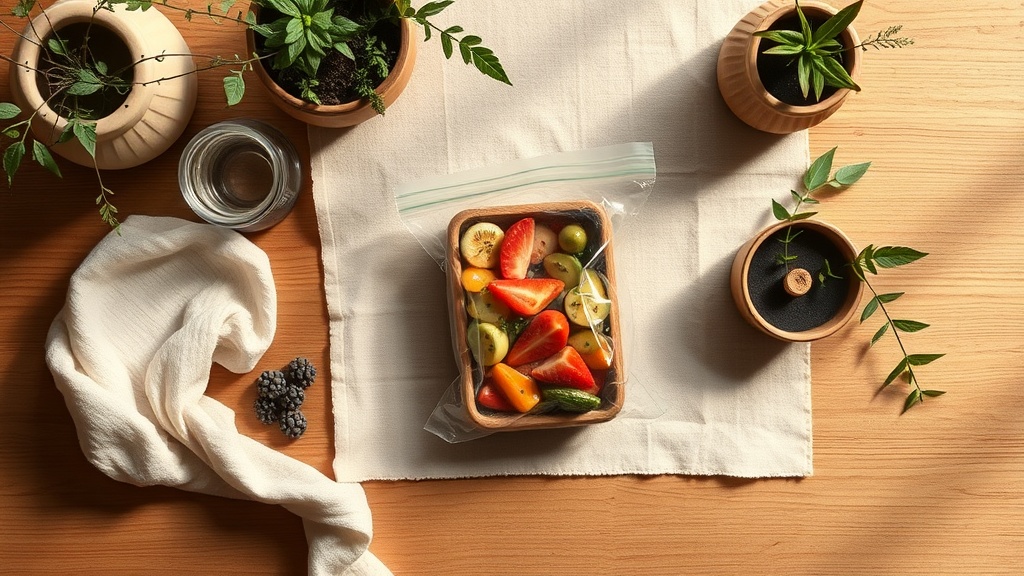
Can plastic food packages release restricted chemicals into food?
Use caution. Plastic food packaging can allow plasticizers, antioxidants, and UV absorbers to move into food. The biggest easy step is to move leftovers and fatty foods into glass or ceramic before storing or heating.
What's actually in it
Plastic food packages can contain additives. These include plasticizers, antioxidants, and ultraviolet absorbers. Additives help plastic bend, last longer, or resist light.
Small amounts can move from packaging into food. Heat, fat, long storage time, and worn plastic make contact more important. This does not mean every package is dangerous. It means food contact is worth reducing when the swap is easy.
What the research says
A 2026 study in Rapid Commun Mass Spectrom built and validated a GC-MS test for 15 restricted substances that can migrate from plastic food packaging into food. The list included 10 plasticizers, 1 antioxidant, and 4 ultraviolet absorbers.
The study reported strong test performance and said this kind of monitoring can support food safety checks for daily food and takeout packaging.
What to do at home
Focus on habits you can change. Do not microwave food in plastic trays or wrap. Move leftovers into glass or ceramic containers. For cheese, meat, and other fatty foods, remove plastic packaging after you get home when that is practical.
The research at a glance
| Study | Journal | Year |
|---|---|---|
| Determination of 15 Restricted Substances in Plastic-Packaged Food by Gas Chromatography-Mass Spectrometry. | Rapid Commun Mass Spectrom | 2026 |