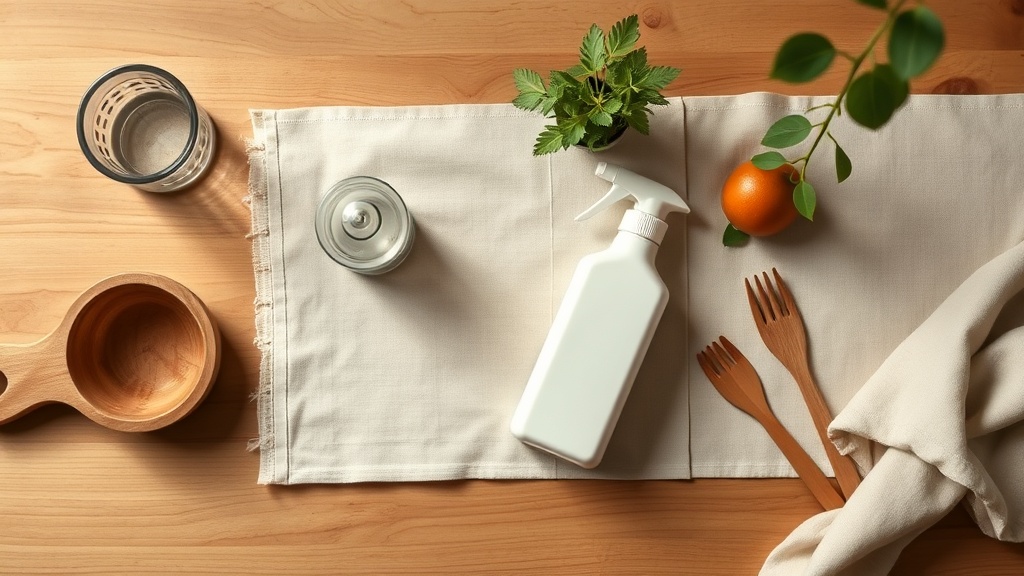
Can cleaner residue on food-prep counters become part of daily exposure?
caution
Short answer
Yes. Residue on food-prep surfaces can matter, especially when the same counter touches snacks, bottles, hands, and lunch prep every day.
This does not mean you should stop cleaning. It means you should clean in a way that does not leave extra residue where food lands.
Why this matters
Some disinfectants and sprays are stronger than a counter needs for everyday crumbs. If they are sprayed near food or left on a prep surface, the residue can become part of daily contact.
Young kids touch counters, eat with their hands, and drop snacks. That raises the standard for food-prep surfaces.
What the research says
A 2026 Environmental Science & Technology study measured quaternary ammonium compounds, or QACs, in dust, air, hand wipes, wristbands, and urine from homes. The researchers found that ingestion of surface residues was a major exposure route for several benzalkonium compounds.
A 2026 Environmental Science and Pollution Research study found that heavy weekly use of many cleaning products, including bleach, sprays, polish, solvents, and acids, was linked with higher current asthma odds and lower lung function.
A 2020 Journal of Food Protection study found that a full wash, rinse, sanitize, and air-dry method worked better on food-contact surfaces than dry wiping alone.
What to do instead
Use the mildest cleaner that works. Follow the label. Rinse food-prep surfaces when the label says to rinse.
Do not spray strong cleaners near uncovered food. For snacks and lunch prep, use a dedicated wood cutting board instead of placing food on a just-cleaned counter.
The research at a glance
What to use instead
A wood cutting board gives snacks and lunch prep a dedicated food surface, so food does not sit on a just-cleaned countertop.
Shop Non-Toxic Kitchen