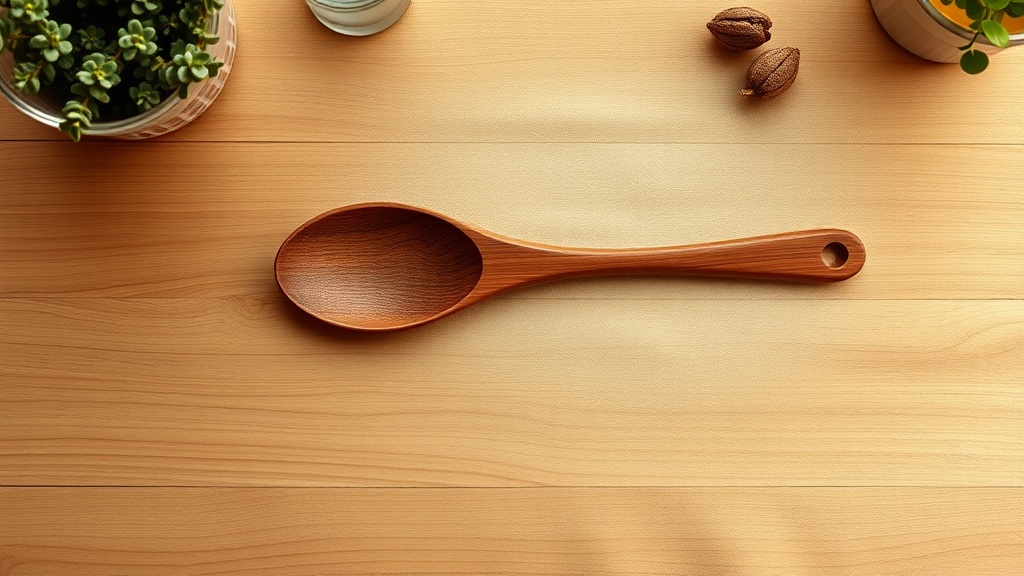
Are wooden cooking spoons truly safer than plastic?
Yes for hot cooking. Wood avoids plastic particles and black-plastic flame-retardant concerns, but it must be washed and dried well.
Short answer
For hot stirring, a solid wooden spoon is a better pick than plastic. Wood does not contain polypropylene, nylon, or brominated flame retardants. The care matters: wash by hand, dry fully, and replace a spoon if it cracks.
What the research says
A 2025 Journal of Agricultural and Food Chemistry study found polypropylene containers released more nano- and microplastic particles after contact with 90 C water than with room-temperature water. A 2018 Science of the Total Environment study tested plastic kitchen utensils and found brominated flame retardants in selected high-bromine utensils, especially older black plastic items.
What to do at home
Use wooden spoons for soup, sauce, and sauteing. Do not put wood in the dishwasher. If a spoon turns rough, smells sour, or has deep cracks, replace it.
The research at a glance
| Study | Journal | Year |
|---|---|---|
| Release of Nanoplastics from Polypropylene Food Containers into Hot and Cold Water. | J Agric Food Chem | 2025 |
| Brominated flame retardants in black plastic kitchen utensils: Concentrations and human exposure implications. | Sci Total Environ | 2018 |