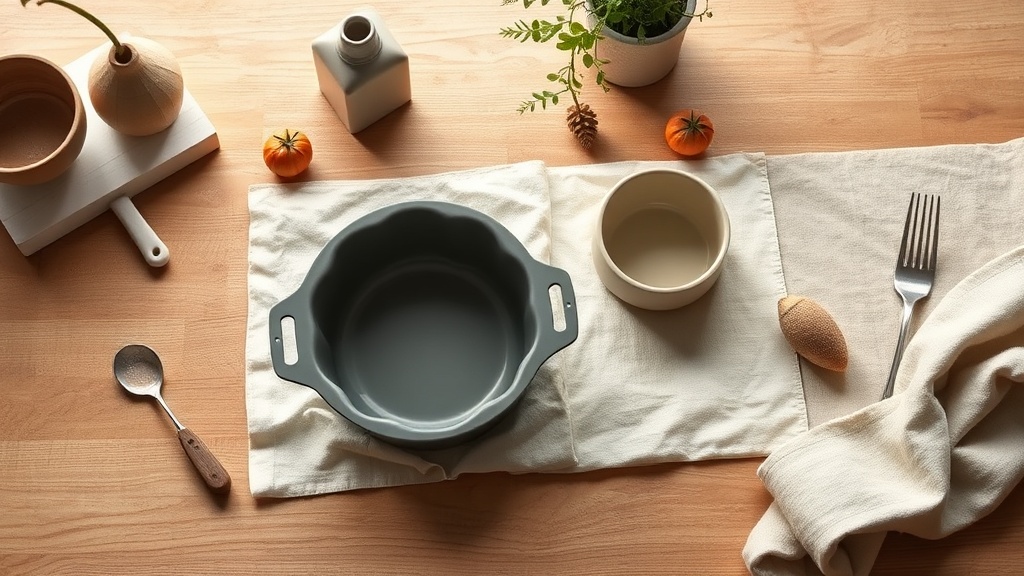
Are silicone baking molds safe for hot oven use?
A 2025 study found silicone bakeware released cyclic siloxanes into baked food simulants and indoor air during 177 C baking tests.
What's actually in it
Silicone bakeware is usually made from polydimethylsiloxane. Small ring-shaped chemicals called cyclic siloxanes can remain in the material.
When silicone is heated, those siloxanes can move into oily foods and into indoor air.
What the research says
A 2025 Journal of Hazardous Materials study tested 25 silicone bakeware products bought in Canada. Researchers measured cyclic siloxanes during 60-minute baking sessions at 177 C.
Total cyclic siloxanes in the bakeware ranged from 680 to 4,300 micrograms per gram. The average sum of D4 to D16 in baked food simulants was 105 micrograms per gram, and 1-hour indoor air levels reached 646 micrograms per cubic meter.
Repeated baking lowered release over time, but did not make the issue disappear. For small baking portions, porcelain ramekins are a better choice than flexible silicone molds.
The research at a glance
| Study | Journal | Year |
|---|---|---|
| Silicone bakeware as a source of human exposure to cyclic siloxanes via inhalation and baked food consumption. | J Hazard Mater | 2025 |