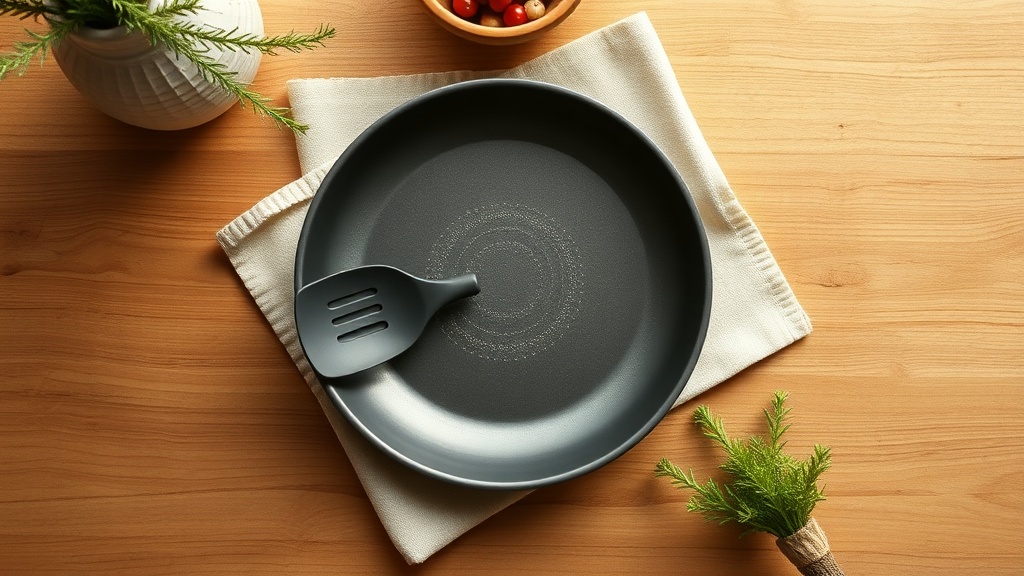
Are plastic kitchen utensils safe for hot pans?
Avoid plastic utensils in hot pans. Heat, scraping, and melting are exactly where plastic cooking tools are weakest. Olive wood or stainless steel is a better daily default for high-heat cooking.
Short answer
Avoid plastic utensils in hot pans.
Heat, scraping, and melting are exactly where plastic cooking tools are weakest.
Why this matters
Utensils touch food while the pan is hot. They also scrape, flex, soften, and wear down over time.
Black nylon, melamine, and mystery plastic tools do not belong in daily high-heat cooking when wood or stainless steel can do the same job.
What the research says
A 2010 Food Additives & Contaminants study tested black nylon kitchen utensils and other food-contact materials. Some black nylon utensils released primary aromatic amines above the non-detectable limit, and long-term release was observed from used utensils.
A 2026 International Journal of Environmental Health Research study measured aromatic amine migration from kitchen utensils sold in Turkey. It found several primary aromatic amines in at least one sample, while noting low potential health risk under the tested conditions.
A 2026 Toxics review described direct microplastic release from consumer goods, including kitchen utensils, through heat, abrasion, and chemical leaching.
What to do instead
Use olive wood, stainless steel, or another clearly food-contact-ready non-plastic utensil for hot pans. Replace melted, rough, cracked, or flaking tools.
For cooking swaps, browse olive wood spatulas.
The research at a glance
| Study | Journal | Year |
|---|---|---|
| Primary aromatic amines (PAAs) in black nylon and other food-contact materials, 2004-2009. | Food Addit Contam Part A Chem Anal Control Expo Risk Assess | 2010 |
| Aromatic amine migration from commonly used kitchen utensils marketed inTurkey: detection and quantification using LC-MS/MS. | Int J Environ Health Res | 2026 |
| From Kitchen to Cell: A Critical Review of Microplastic Release from Consumer Products and Its Health Implications. | Toxics | 2026 |
What to use instead
Use olive wood or stainless steel for hot pans. Replace plastic tools that are melted, rough, cracked, or flaking.
Shop Non-Toxic Kitchen