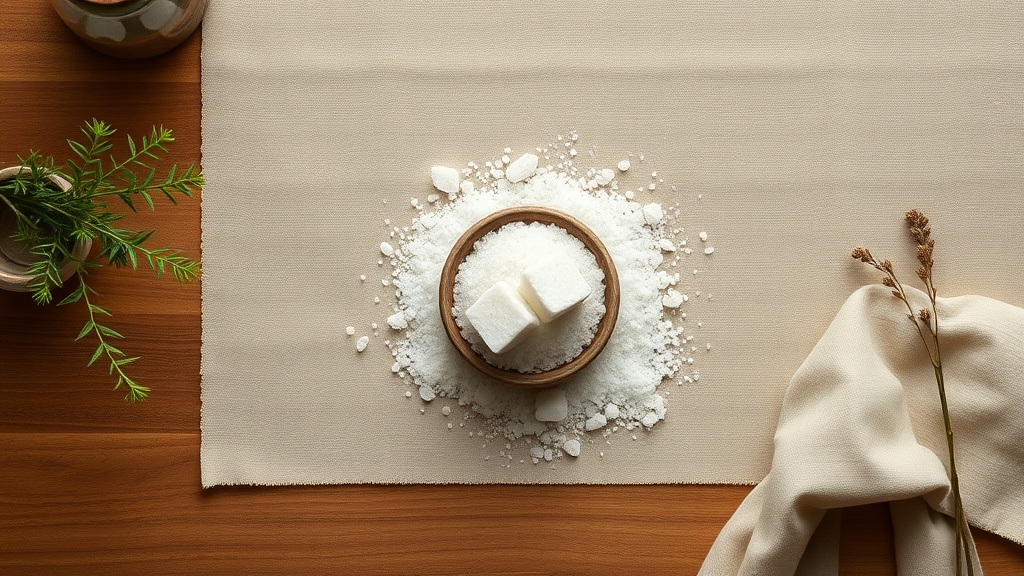
Can plastic salt grinders add microplastics to salt?
caution
Short answer
Yes. Plastic salt grinder heads can add microplastics to salt during grinding.
Sea salt can also carry environmental microplastic questions. But the stronger household fix is simpler: avoid plastic grinder heads.
Why this matters
Salt is a small part of the diet, so this is not a reason to panic about every pinch.
It is a reason to skip plastic grinding hardware when glass, ceramic, wood, or stainless steel storage can do the job.
What the research says
A 2026 Science of the Total Environment study tested salt products with plastic grinder heads. The plastic heads released microplastic particles during routine salt grinding, and the particles matched the grinder-head polymers.
The study reported 1,091, 2,420, and 15,743 particles per 50 g of salt across 3 tested retail grinder groups.
A 2026 Marine Pollution Bulletin study found that microplastics associated with harvested sea salt affected brine shrimp and increased Vibrio biofilm measures. That study is not a human diet study, so it should be read as environmental context.
What to do instead
Choose loose salt in simple packaging when practical. Store salt in a glass jar. Avoid plastic grinder heads, especially for daily use.
For kitchen storage swaps, browse glass jars.
The research at a glance
| Study | Journal | Year |
|---|---|---|
| Investigating microplastic release from plastic grinder heads during salt grinding. | Sci Total Environ | 2026 |
| Sea salt associated microplastics amplify pathogenic Vibrio and impair development in brine shrimp (Artemia franciscana). | Mar Pollut Bull | 2026 |