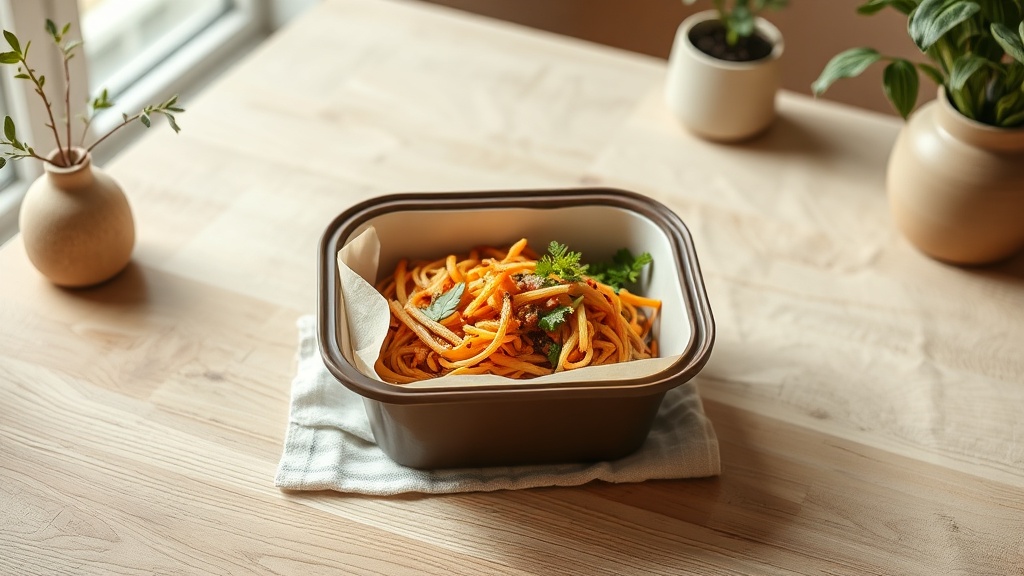
Are fiber-based food containers safe for reheating takeout in the microwave?
Avoid microwaving takeout in fiber-based containers unless the package clearly says it is microwave-safe. Fiber packaging can include grease-proofing chemistry, and heat is not the time to guess.
Fiber-based takeout containers can look safer than plastic because they resemble paper or molded plant fiber. The catch is grease resistance. If a bowl can hold oily noodles, curry, or fried food without soaking through, it may rely on added coatings or treatments.
Microwaving turns that package into a heat-contact material. Unless the container is clearly labeled for microwave use, move the food first.
What the evidence says
A 2026 Journal of Agricultural and Food Chemistry paper validated a method for detecting PFAS-containing grease-proofers in fiber-based food packaging. A 2026 Journal of Hazardous Materials study found that food-contact packaging labeled as plant-based or biodegradable can still have complex material composition, including synthetic polymers in some products. These sources do not prove every fiber container is unsafe in a microwave. They do support not guessing with heat, grease, and takeout packaging.
Better reheating rule
- Use the takeout container for transport, not reheating.
- Move food into glass or porcelain before microwaving.
- Be extra careful with oily, acidic, or very hot foods.
- Do not treat compostable-looking packaging as automatically better for heat.
This page supports NonToxCo kitchen swaps because glass storage solves the reheating problem without decoding every takeout package.