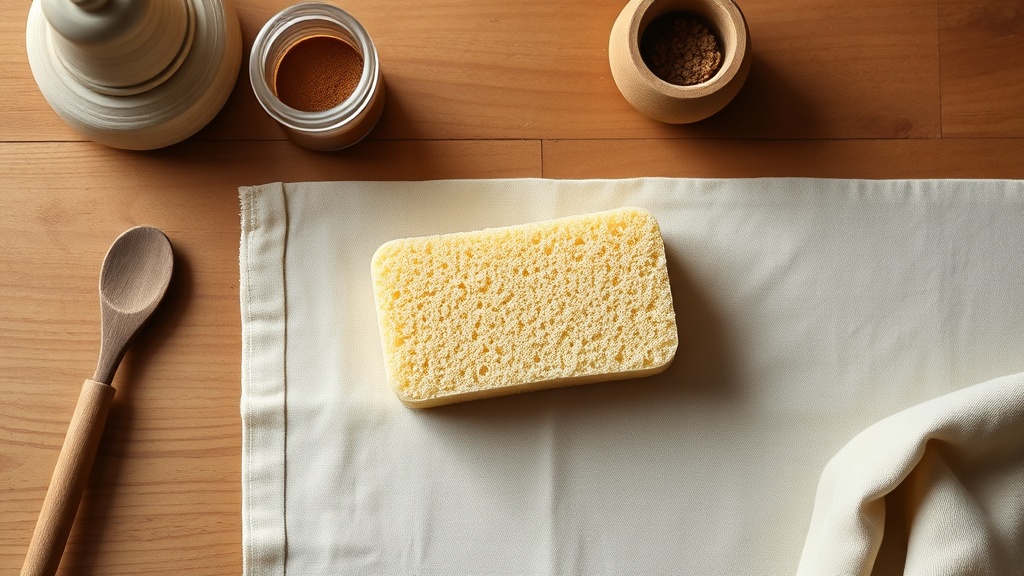
Are cellulose sponges safer than plastic ones?
Usually yes, if the sponge is plain cellulose and not backed with plastic scrub material.
What to know
Plain cellulose is made from plant fiber. A plastic sponge is usually polyurethane foam, polyester, nylon, or a mix of synthetic scrub layers. For daily dishwashing, plain cellulose is the better material choice.
Read the label. Some sponges sold as plant-based still add a plastic scrub layer. If you want the lowest-plastic option, choose plain cellulose, loofah, or a washable cotton or linen cloth.
Material is only half the story. Any wet sponge can hold bacteria. Rinse it well, squeeze it dry, let it air out, and replace it often.
What the research says
A 2016 Int J Food Sci study tested 201 kitchen sponges and found high counts of bacteria, coliforms, Enterobacteriaceae, yeast, and molds. A 2024 Environ Sci Technol study found that abrasive synthetic cleaning sponges can release microplastic fibers during wear.
These studies support a simple choice: use less synthetic sponge material when you can, and do not keep any damp sponge too long.
The research at a glance
| Study | Journal | Year |
|---|---|---|
| Microbiological Safety of Kitchen Sponges Used in Food Establishments. | Int J Food Sci | 2016 |
| Mechanochemical Formation of Poly(melamine-formaldehyde) Microplastic Fibers During Abrasion of Cleaning Sponges. | Environ Sci Technol | 2024 |