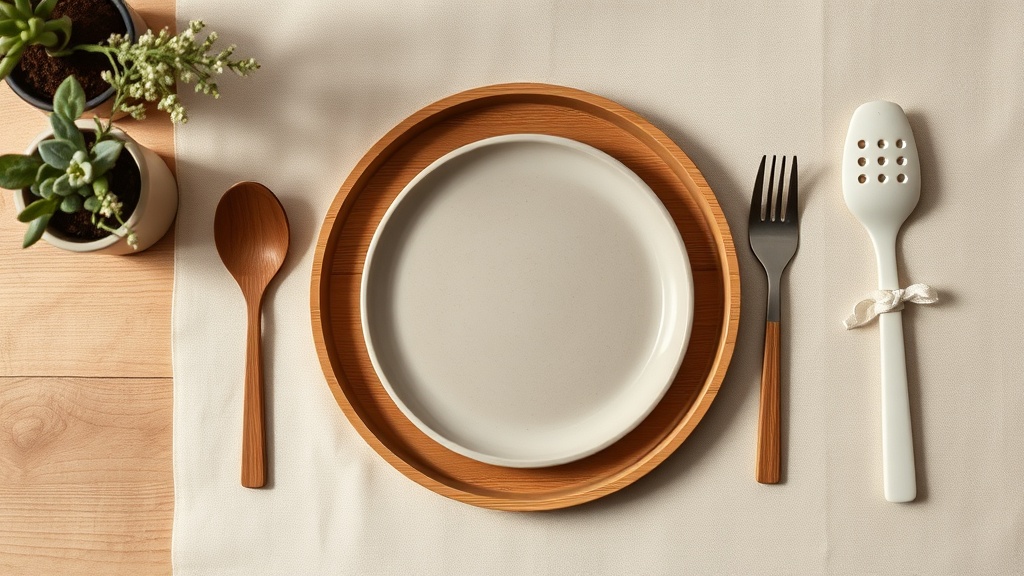
Are bamboo plates and utensils safe to eat from?
Use caution. A 2025 Food Chem X study found many chemicals in bamboo-based food-contact items, including 5-HMF and melamine-related compounds in one suspected melamine sample.
What bamboo kitchenware can be
Bamboo sounds simple. But some bamboo plates, bowls, and utensils are made from bamboo material that is pressed, glued, coated, or mixed with other materials.
That matters because food touches the surface. Heat, oil, acid, and long use can change what moves from the surface into food.
What the research says
A 2025 study in Food Chem X looked at bamboo-based food-contact articles, including plates and chopsticks. The researchers used GC-MS and LC-MS to screen the materials.
They found a wide mix of volatile and semi-volatile compounds. Some were concerning, including 5-hydroxymethylfurfural, also called 5-HMF. In one sample suspected of containing melamine, they detected melamine and related compounds.
The study does not prove every bamboo plate is unsafe. It does show that "bamboo" on a label does not always mean the item is simple or low-concern.
What to choose instead
For everyday meals, choose plain porcelain, stainless steel, glass, or solid wood pieces when you can. Avoid using bamboo-composite dishware for hot, oily, or acidic foods.
If a bamboo item looks like molded plastic, feels glossy, or is not marked for heat, treat it with care.
The research at a glance
| Study | Journal | Year |
|---|---|---|
| Exploring the chemical composition of bamboo-based food contact materials using GC-MS and LC-MS. | Food Chem X | 2025 |