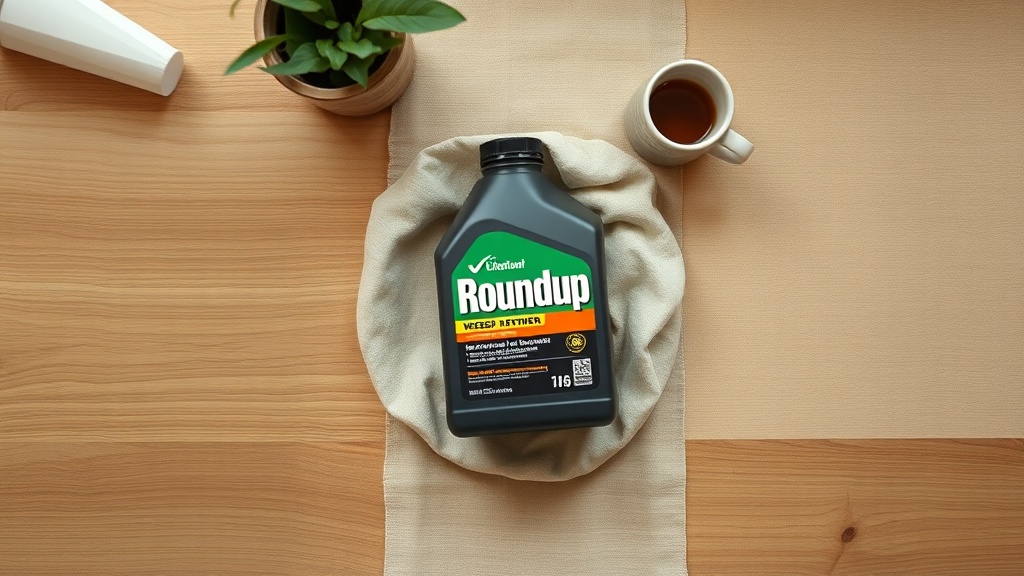
Is using Roundup weed killer in your yard linked to lymphoma?
Yes. An updated evidence review concluded that glyphosate, the active ingredient in Roundup, is a cause of non-Hodgkin lymphoma.
What's actually in it
Glyphosate is the active ingredient in Roundup, the world's most widely used herbicide. Millions of homeowners spray it on driveways, garden beds, and lawns to kill weeds. It's also sprayed on food crops, so trace amounts end up in bread, oats, cereal, and other grain-based foods.
When you spray Roundup at home, you absorb glyphosate through your skin and breathe it in as a mist. Kids and pets who walk on treated grass pick it up too. It doesn't wash off easily and can linger on surfaces for days.
What the research says
A 2026 evidence review in Clinical Lymphoma, Myeloma & Leukemia examined all the accumulated data on glyphosate and cancer. The conclusion: glyphosate is a cause of non-Hodgkin lymphoma (NHL), a cancer of the immune system.
This wasn't a new or controversial claim. The International Agency for Research on Cancer classified glyphosate as "probably carcinogenic to humans" back in 2015. Since then, more studies have strengthened the case. This 2026 review pulled it all together and found the evidence is now even stronger.
The risk is highest for people who regularly handle the product, like homeowners who spray it every few weeks during summer. But dietary exposure through food residues adds to the total load. The more glyphosate your body has to deal with, the higher the risk over time.
Tens of thousands of lawsuits against the makers of Roundup have resulted in billions of dollars in settlements, most filed by people who developed NHL after years of using the product.
For your yard, try manual weeding, vinegar-based herbicides, or boiling water on driveway cracks. They work well for home use without the cancer risk. If you have Roundup in your garage, don't let kids or pets near treated areas.
The research at a glance
| Study | Journal | Year |
|---|---|---|
| An Update of Evidence that the Herbicide Glyphosate (Roundup) is a Cause of Non-Hodgkin Lymphoma | Clin Lymphoma Myeloma Leuk | 2026 |
What to use instead
Browse our vetted, non-toxic alternatives. Every product is third-party certified.
Shop Non-Toxic Home