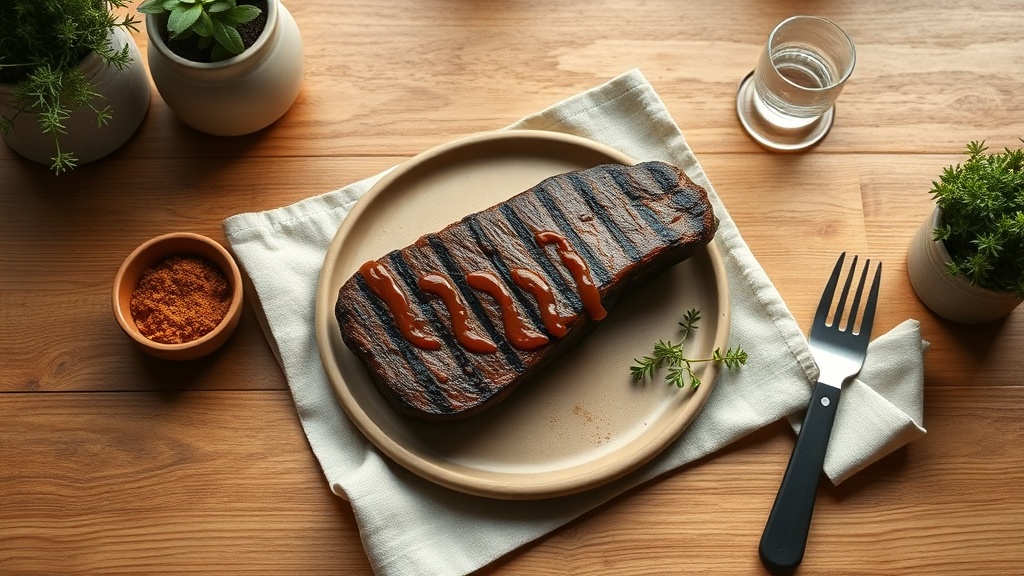
Is it safe to eat well-cooked grilled meat once a week if you have colon cancer risk?
Not if it's charred. Heterocyclic amines and PAHs from grilling carry colon cancer signal.
What's actually in it
High-heat cooking of meat (grilling, broiling, pan-searing at high heat) produces heterocyclic amines (HCAs) from the reaction of amino acids with creatine. PAHs form from fat dripping onto coals and smoke depositing back on the meat. Both are classified as probable human carcinogens. Colon cancer risk is particularly sensitive to these compounds.
"Well-done" meat has the highest HCA and PAH concentrations.
What the research says
A 2026 review in Int J Mol Sci on cellular senescence triggered by food and environmental genotoxins identified HCAs and PAHs among the top dietary genotoxins. For people with colon cancer risk factors (family history, prior polyps, IBD), reducing these compounds is a reasonable move. A 2026 review on early-onset colorectal cancer adds dietary genotoxins to the identified risk drivers.
Lower-HCA grilling: cook meat medium rather than well-done, marinate for 30+ minutes before grilling (reduces HCA by half or more), avoid charring, and trim visible fat to reduce PAH formation from drippings. Boiling, braising, or slow cooking produce far fewer HCAs than grilling. For high-risk people, grilled meat as an occasional treat rather than weekly staple is the cleaner pattern.
The research at a glance
| Study | Journal | Year |
|---|---|---|
| Cellular Senescence Triggered by Food and Environmental Genotoxins. | Int J Mol Sci | 2026 |
What to use instead
Browse our vetted, non-toxic alternatives. Every product is third-party certified.
Shop Non-Toxic Kitchen