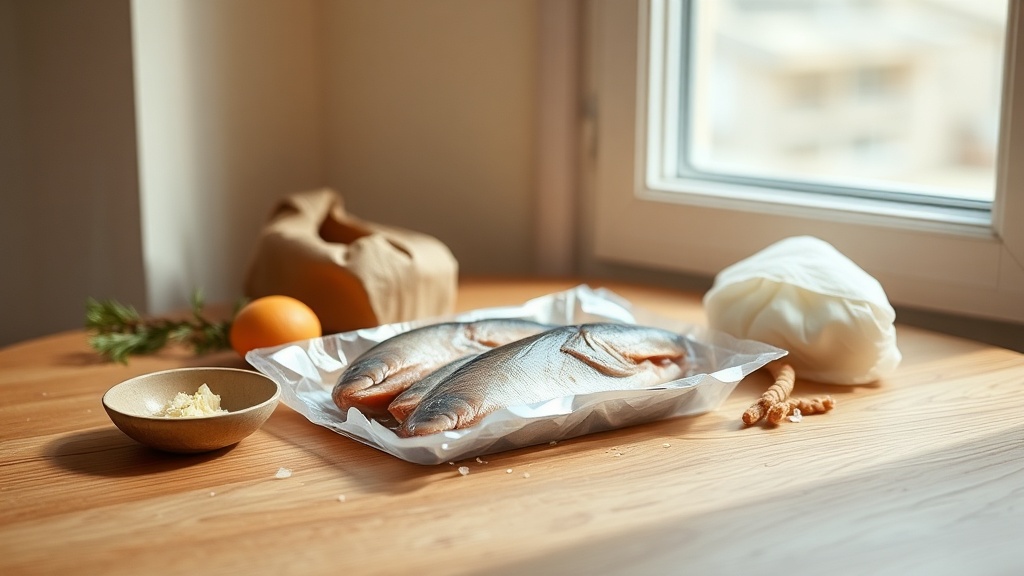
Microplastics in frozen seafood packaging are in your dinner

NonToxCo Research
Science & Safety Team · 3/27/2026
You are eating microplastics every time you thaw a bag of frozen seafood. A 2026 study published in Food Chem analyzed six common seafood products and found 421 plastic particles across every single sample. This is not a contamination issue you can wash off. It is coming from the packaging itself.
Researchers used micro-Raman spectroscopy to identify the debris, finding PTFE, PVC, and PVA fibers leaching directly into the food. Even worse, they identified hazardous additives like di-n-butyltin dichloride and 3,3'-diaminobenzidine. You can read the full breakdown of the findings here. These particles are not inert. They are chemical-laden fibers measuring up to 5 mm that end up on your plate.
The seafood industry is failing to prioritize safe storage, so you have to take control of your own kitchen. Start by ditching plastic-wrapped frozen goods whenever possible. Buy fresh from a local counter or source frozen items that use verified, plastic-free storage methods. We have curated a list of non-toxic kitchen alternatives to help you store your food without the chemical migration. It is time to stop letting plastic packaging dictate the safety of your family's meals.
Source: Can-Tuncelli I, Erkan N, Sarıçam M, Harbeck S (2026). Food Chem.