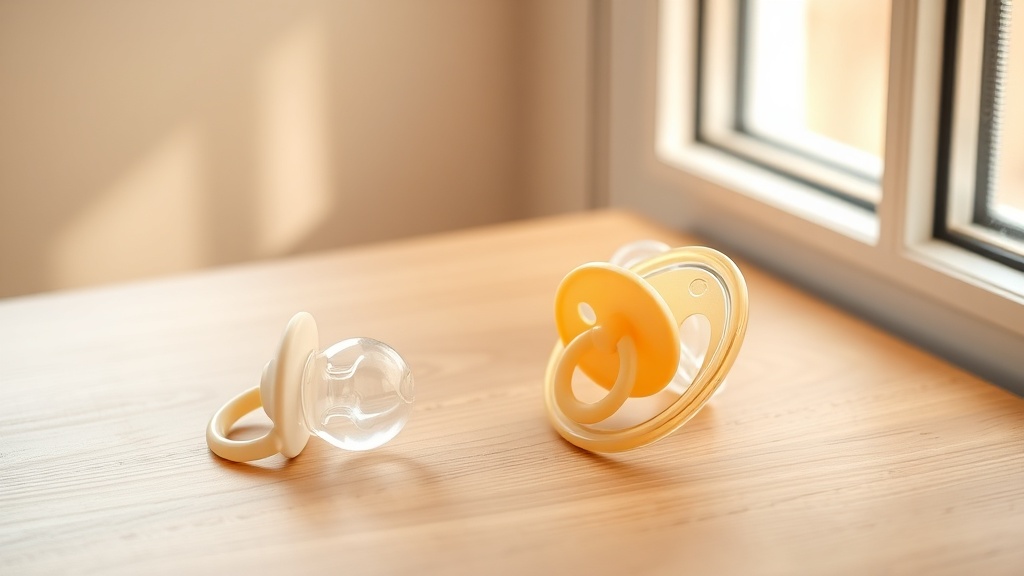
Are BPA free pacifiers actually safe? The data says no.

NonToxCo Research
Science & Safety Team · 3/27/2026
That BPA-free label on your baby's pacifier is effectively meaningless. A 2026 study published in Environmental Science and Pollution Research found that pacifiers are leaching bisphenol A directly into infants' mouths, even when the packaging claims otherwise.
Researchers analyzed seven commercially available pacifiers and found BPA migration levels as high as 288 µg/L. In a worst-case scenario, the total BPA released from a single pacifier reached 26,536 ng. Most concerning? The highest migration was found in a product explicitly marketed as BPA-free. You can read the full breakdown of the study findings here.
These levels easily exceed the current European Food Safety Authority tolerable daily intake of 0.2 ng/kg per day. Because infants have immature detoxification systems, this constant exposure during critical development stages is a massive problem. The industry is currently operating without strict regulation for these products, leaving parents to navigate a market where the label on the box doesn't match the reality of the chemistry.
You don't have to wait for the government to catch up to the science. Stop relying on vague marketing claims and look for materials that don't require chemical stabilizers or plasticizers to function. We have vetted a range of non-toxic baby alternatives that prioritize safety over convenient, cheap manufacturing. It is time to ditch the plastic and choose materials that don't leach chemicals into your child's development.
Source: Herwanger L, Sternecker K, Kühnisch J, Reichl FX, Högg C (2026). Environ Sci Pollut Res Int.