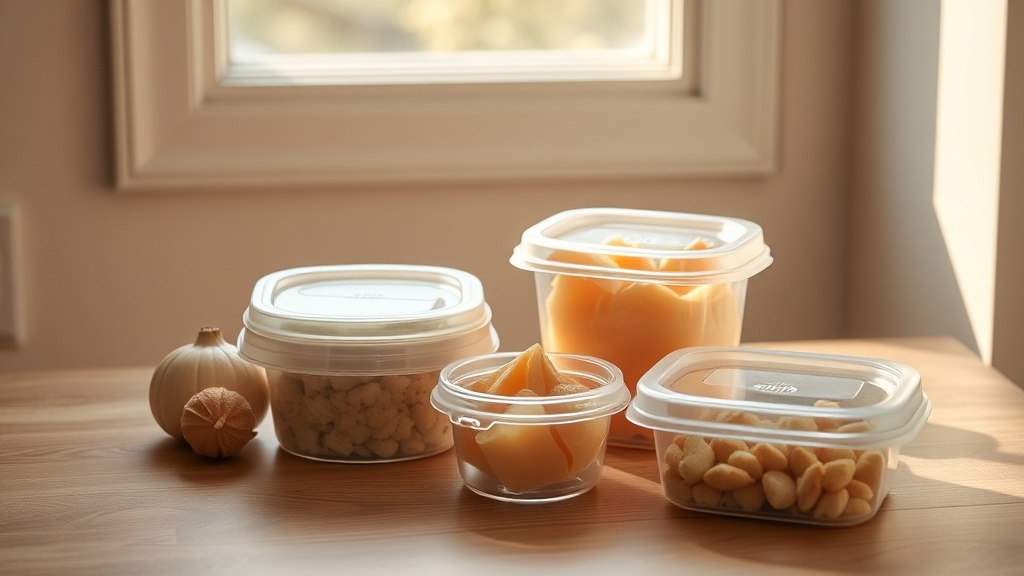
Are Bioplastic Food Containers Safe? The Science Says No

NonToxCo Research
Science & Safety Team · 3/29/2026
The 'Bio' Label Isn't a Safety Shield
You’re swapping out standard plastic for bioplastics to avoid chemicals. It makes sense, right? Unfortunately, a 2026 study in Analytical and Bioanalytical Chemistry just proved that these materials are far from inert.
Researchers tested 17 types of bio-based and biodegradable food packaging, including PLA, bio-polypropylene, and bio-polyethylene. They didn't just find plastic—they found a chemical cocktail. PLA, bio-polyester, and bio-polyester-PVOH showed high levels of cytotoxicity. Even worse, PLA extracts were found to induce inflammation through high ROS production, while bio-polypropylene and bio-polyethylene exhibited endocrine-disrupting potential.
Stop Trusting 'Biodegradable' Marketing
The industry sells these products as the sustainable, safe alternative. But the science shows they are leaching oligomers, additives, and degradation products directly into your meals. If you are heating food in these containers, you are likely accelerating that chemical transfer.
It is time to stop relying on marketing buzzwords and look at the actual material composition. If you want to keep your food free from endocrine disruptors and cytotoxic additives, stick to materials that don't need to be engineered to mimic plastic. We have curated a list of non-toxic kitchen alternatives that rely on glass, stainless steel, and wood instead of experimental biopolymers. Ditch the 'bio' plastic and go back to basics.